



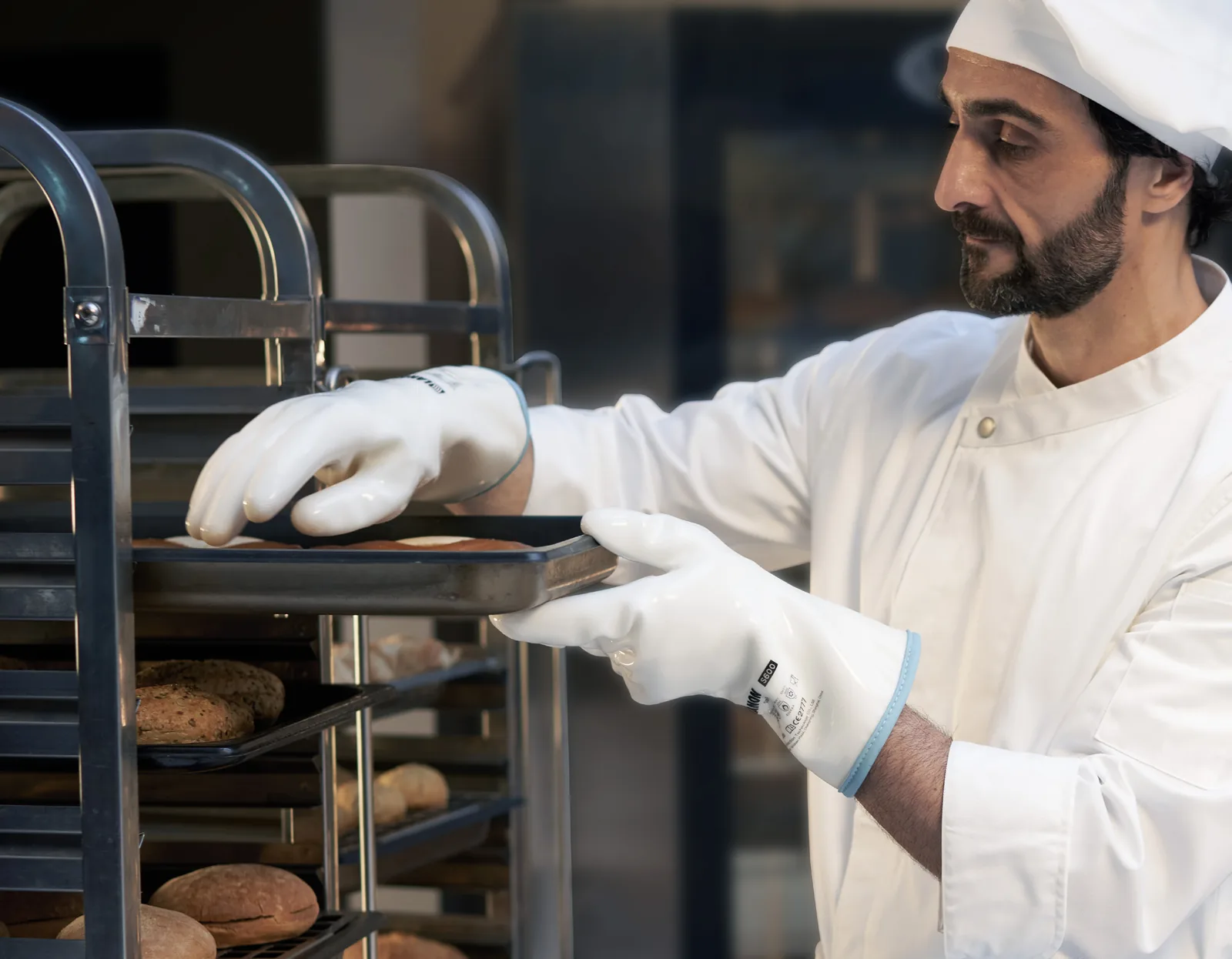
Liquid silicone gloves can be an effective platform for selected thermal and handling tasks, but buyers should resist choosing by material name or product appearance alone. The safe working conditions of a glove depend on the exact model, liner, thickness, contact mode and available test evidence.
A bakery tray, heated tool, cold-chain container and electrical maintenance task may all appear in a silicone range, yet they require different selection questions. The following checklist helps purchasing teams organize those questions before sampling.
Define heat contact precisely
Record the object temperature, contact duration, contact frequency and recovery time between contacts. Distinguish contact heat from convective heat, radiant heat, steam and hot-liquid splash.
The temperature of a process does not automatically equal the temperature at the glove surface. Factory testing and the applicable standard should be reviewed for the exact model.
- Object or process temperature
- Seconds of contact per cycle
- Cycles per hour or shift
- Dry heat, steam, liquid or radiant exposure
- Required hand and forearm coverage
Review the liner and hand-form construction
A liner influences comfort, thermal buffering, sweat management and dexterity. The supplied catalog describes different liners and cuff constructions across the silicone range, so buyers should not assume that all models feel or perform the same.
Three-dimensional dipping can support a hand-shaped form, but fit still needs to be checked across the required size range with the actual movement pattern.
Check grip with the real object
Grip should be evaluated using the actual tray, tool, component or container. Surface texture, contamination, object weight and glove flexibility can change handling security.
A useful sample test repeats the real movement: approach, grasp, lift, carry, place and release. Record loss of grip, fatigue and any tendency for the glove to twist on the hand.
Plan cleaning and product care
Reusable gloves need a defined cleaning, drying, inspection and replacement process. For food-related tasks, buyers must separately confirm applicable food-contact requirements and cleaning procedures for the target market.
Inspect gloves before use for cuts, surface damage, hardening, contamination and changes in flexibility. A visually intact glove may still require replacement under the user’s safety program.
Treat application photos as context, not proof
Catalog application images help buyers understand intended use settings, but they are not test reports. A bakery photo does not establish a temperature rating, and an electrical scene does not by itself establish electrical protection.
Ask the supplier to connect every protection statement to the exact model, standard, test result and current document revision.
Sample before approving production
Use samples to check fit, dexterity, cuff interaction, grip and task compatibility. Keep an approved reference sample and a written specification for production.
Before shipment, inspection can compare model markings, dimensions, color, surface finish, packaging and quantity with the approved specification. Any safety or compliance verification should follow the agreed document plan.
Frequently asked questions
Does a silicone glove have one universal heat rating?
No. Thermal performance is model- and test-specific. Contact method, duration, temperature, liner and glove condition all matter.
Are all silicone gloves suitable for food handling?
No. Food-contact suitability must be confirmed for the exact product and target market with the appropriate current documentation.
What should be included in a silicone glove sample trial?
Include fit, repeated movement, object grip, contact duration, cuff interaction, cleaning method and user feedback under controlled conditions.
Conclusion
A strong silicone glove sourcing brief translates the real thermal task into measurable contact conditions, sample checks and document requirements. That gives the manufacturer and buyer a shared basis for model selection.