



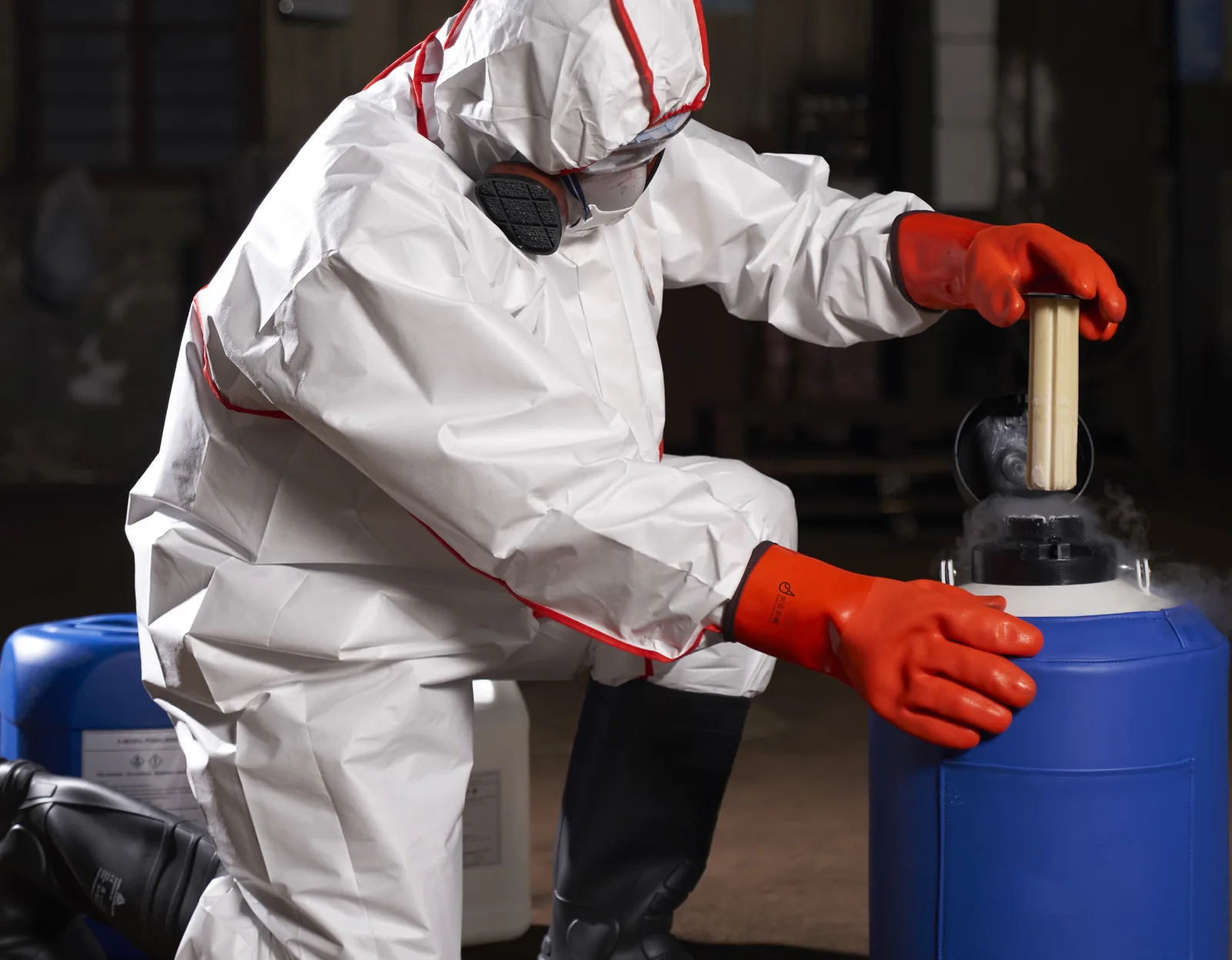
Cold-work glove decisions are easy to oversimplify. A freezer operator handling cartons, a worker outdoors in wind and a technician touching chilled components do not face the same exposure. Temperature, contact time, moisture, wind, task pace and required dexterity all affect what a glove needs to do.
Use this checklist to turn the operating conditions into a product brief and a sample plan. It supports sourcing decisions but does not replace the employer’s risk assessment or model-specific performance review.
Describe the cold exposure
Record the normal and worst-case ambient conditions, whether the work is indoors or outdoors, and how long hands remain exposed. Distinguish continuous cold exposure from intermittent contact with chilled objects. Add wind, condensation, wet surfaces and transitions between cold and warm areas.
The temperature printed for a product or material should not be treated as an automatic safe-use limit. Check what the stated value means, which test method applies and whether the evidence covers the exact model and exposure type.
- Ambient and object temperatures
- Exposure duration and recovery breaks
- Dry, damp, wet or windy conditions
- Frequency of entering and leaving cold zones
- Task-specific safety and market requirements
Balance warmth with work control
Insulation can improve comfort but may reduce fingertip feel and make small objects harder to handle. The right balance depends on the task: carton movement, scanning, picking small parts and equipment operation place different demands on the hand.
Test the gloves with actual tools, controls and packaging. Ask workers whether the glove can maintain a secure grasp while still allowing the movements needed to work safely and efficiently.
Review liner, fit and cuff interaction
Liner material, layering and knit construction influence bulk, flexibility, moisture management and the way a glove sits on the hand. Size should accommodate the intended liner without excess space at the fingertips or uncomfortable pressure across the palm.
Check the cuff alongside sleeves and protective clothing. Gaps, bunching or trapped moisture can undermine comfort and complicate donning. If workers wear a thin underglove, assess the complete combination rather than each item separately.
Evaluate grip in cold and wet conditions
Surface finishes can behave differently as temperatures fall or condensation appears. Recreate the real pick-up, carry, placement and release cycle with representative materials. Include smooth cartons, containers, metal handles or other relevant surfaces.
Record slips, extra grip force, re-gripping and fatigue. Where testing is performed, keep the load and task consistent across models so the comparison is meaningful.
Set care, rotation and replacement rules
Cold-work gloves may become damp through the task or during transitions. Define how they are dried, stored, inspected and rotated, and when they are replaced. Follow the product care instructions and site procedures; do not improvise cleaning that could affect the material or coating.
Train users to report damage, loss of grip, stiffening or changes in fit. Procurement can support consistent availability by specifying replacement quantities and keeping approved sizes in stock.
Confirm documentation for the exact model
Request the current data sheet and applicable test reports for the model under review. Match the model code, size range, construction, standard and intended market. A general cold-protection description or an application image is not a substitute for evidence or a workplace assessment.
Record who approved the sample and the conditions under which it was evaluated. This makes seasonal replenishment and supplier changes easier to review.
Frequently asked questions
Can one glove work for every cold-storage task?
Usually, different tasks need different balances of insulation, dexterity, grip and cuff coverage. Group tasks by exposure and handling demands before selecting models.
Does a temperature range guarantee protection for a full shift?
Not by itself. Understand the test method and conditions behind the rating, then assess the exact task, duration, moisture, fit and current documentation.
What should be included in a cold-work glove trial?
Include the actual work cycle, representative surfaces and objects, fit over the planned underlayers, exposure duration, dexterity, grip, moisture observations and wearer feedback.
Conclusion
Cold-work glove sourcing works best when exposure and handling are assessed together. A clear brief, representative trial and model-specific document check help teams select a glove that fits the job rather than relying on a generic claim about warmth.